
Stake Chicken Canada
One chicken. A night road. A multiplier that climbs with every step.Stake Chicken is a fast, crash-style arcade game from Stake Originals where you decide exactly how far to push your luck. Canadian players enjoy it for its clean design, instant feedback, and the feeling that every decision matters — whether you play on desktop, tablet, or mobile.
Quick Snapshot
- Provider: Stake Originals
- Game type: crash / step-ladder arcade
- RTP: ~98.00%
- House edge: ~2.00%
- Difficulty: Easy / Medium / Hard / Expert
- Plays well on: desktop, tablet and mobile
- Fairness: provably fair (seed verification)
Note: availability, limits, and demo options can vary by site and province. Always play at a licensed operator where applicable.
What Is Stake Chicken?
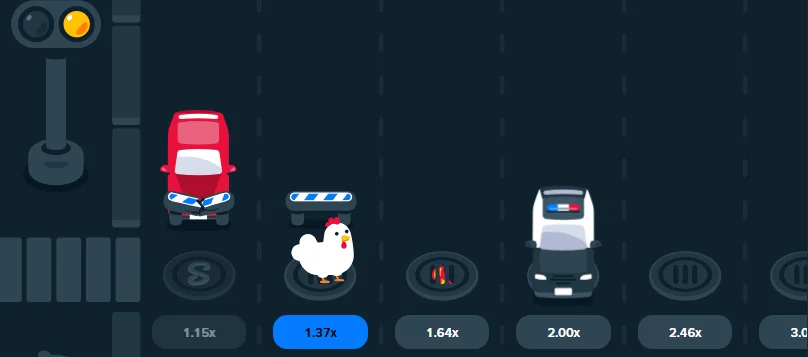
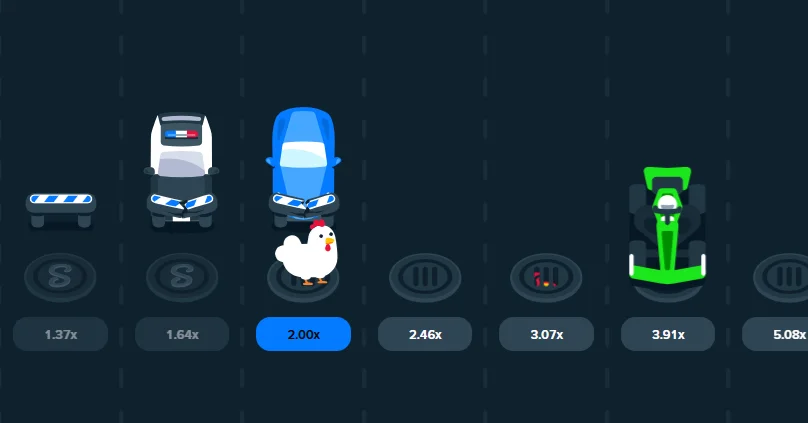
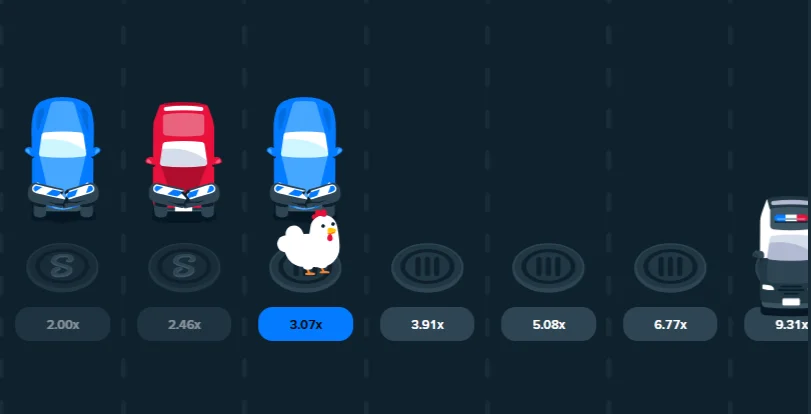
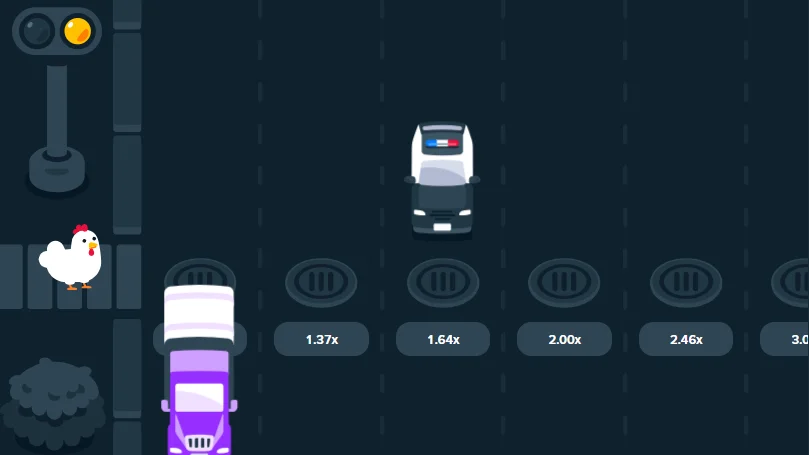
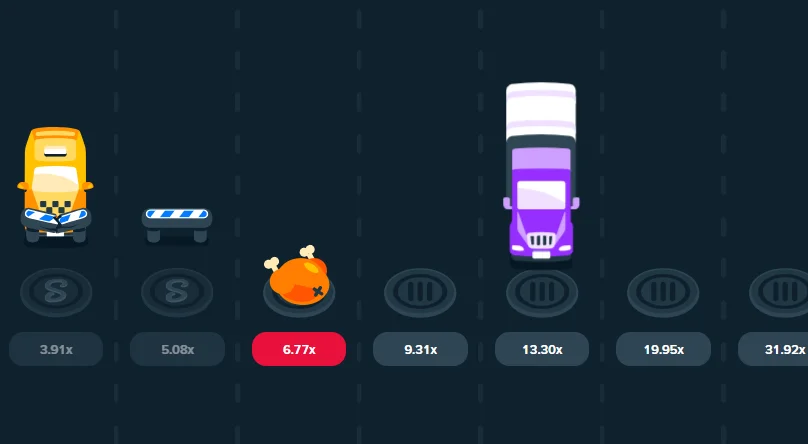
Stake Chicken is a step-based crash game where you guide a cartoon chicken across a multi-lane road at night. Each safe tile increases a visible multiplier. You can cash out at any moment and take stake × multiplier, or you can push forward for a bigger number and accept the risk of losing the entire round in one instant.
That’s the whole concept — and that simplicity is the point. You’re not chasing paylines or waiting for a bonus feature. You’re making one decision repeatedly: bank now or take another step. It’s a format that works anywhere because it’s built around clarity, not clutter.
Stake Chicken also adds personality to the crash format. You can literally see the danger: headlights, lane changes, and hazards that end a run without mercy. It’s light-hearted visually, but the volatility is real — especially when you crank difficulty up and the multiplier starts climbing like it’s late for a flight out of Pearson.
Why Stake Chicken Clicks With Canadian Players
If you like games that respect your time and make the risk obvious, Stake Chicken does a lot right. It’s easy to learn in minutes, but it stays tense because every extra tile is a fresh decision — not a passive animation.
It’s “One-Screen” Simple
No clutter, no feature hunting. The road, the chicken, and the next multiplier are always right in front of you. That makes it easy to play responsibly, too — you know exactly what the next choice costs, and you don’t get carried by long animations.
Fast Rounds That Fit Any Session
A session can be ten rounds in just a few minutes or a longer, more structured run with clear limits. That flexibility makes Stake Chicken easy to fit into different play styles. The flip side is obvious: speed can push you into “just one more” mode, which is why setting limits matters on every platform.
Control Over Volatility
Four difficulty modes let you choose your pace. Easy feels like controlled progress. Expert feels like a dare. That range matters if you prefer calmer CAD micro-stakes most days, but still want the option for a few spicy attempts.
How the Game Works (Step-by-Step)
Stake Chicken is easy to learn because each round follows the same loop. The “skill” is not reflexes — it’s discipline. You’re managing temptation as the multiplier gets louder in your head.
- Choose your difficulty. Easy, Medium, Hard, or Expert. This sets the volatility and how aggressive the multiplier growth feels.
- Set your stake in CAD. Pick an amount that you’re comfortable losing in one round. Small stakes are the smartest way to learn the rhythm.
- Start the round. The chicken steps onto the first tile and a starting multiplier appears.
- Decide: step or cash out. Each safe tile increases the multiplier. Cash out locks in stake × multiplier.
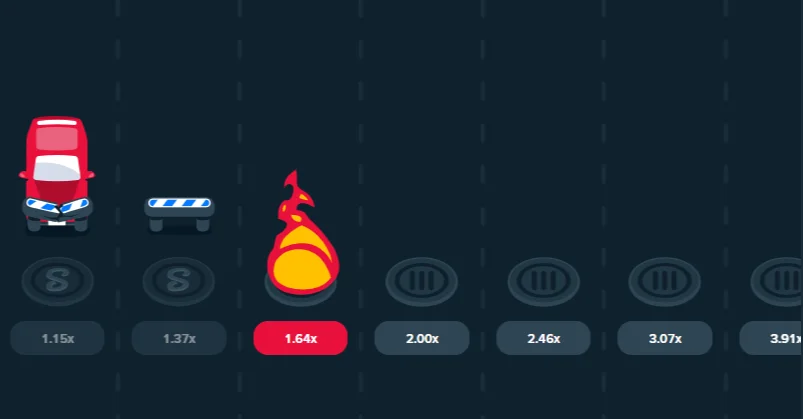
- If you get hit, the round ends. A failed step wipes the stake for that round. There’s no partial refund — it’s all-or-nothing by design.
After a few minutes, you’ll notice the real pressure point: when you’re already sitting on a “good enough” number, but the next tile is flashing a better one. Stake Chicken rewards players who can take a win and move on.
Session Rules That Actually Help
- Start Easy/Medium even if you like volatility.
- Pick a cash-out range before you tap “Bet”.
- Run 10–15 rounds with the same settings first.
- Keep a separate “spicy” budget for Hard/Expert.
- Use a time cap (for example, 10 minutes) so speed doesn’t blur the session.
Tip: if you’re raising stakes after a win, do it slowly. Fast games magnify fast decisions.
Key Game Facts (Canada)
| Provider | Stake Originals |
| Game style | Crash / step-ladder arcade |
| RTP | ~98.00% |
| House edge | ~2.00% |
| Volatility | Player-controlled (4 modes) |
| Cash-out | Any safe tile |
| Fairness | Provably fair seed verification |
| Currency examples | CAD stakes (varies by site) |
Numbers are useful, but Stake Chicken is mostly about decision quality. You always know what the next tile would pay. What you don’t know is whether the next step survives — and that uncertainty is the entire engine of the game.
If you’re playing in CAD, the best habit is simple: treat each round as a standalone purchase of entertainment. If the stake would annoy you to lose instantly, it’s too high for this format.
Difficulty Levels Explained (Easy to Expert)
Difficulty in Stake Chicken isn’t cosmetic. It changes how quickly multipliers become tempting and how punishing the road feels. The cleanest way to play is to treat each mode like a separate game with its own “normal” cash-out range.
Easy
More breathing room, gentler growth, and a rhythm that lets you build good habits. Easy is where you learn the game without the multiplier shouting at you every second.
Best for: first sessions, lower-stress play, steady CAD micro-stakes.
Medium
The balanced setting. The multiplier becomes interesting sooner, but you still have time to make sensible exits. Many players treat Medium as the default mode for regular sessions.
Best for: everyday play, structured cash-out ranges, mobile sessions.
Hard
Shorter, sharper, and emotionally louder. You can hit strong multipliers in fewer steps, but losing streaks feel heavier because you’re constantly tempted to “recover” with one more run.
Best for: experienced players, short bursts, controlled risk.
Expert
The “hero run” mode. Multipliers ramp fast, and most attempts end quickly. The appeal is obvious: the rare run that survives long enough to produce a genuinely huge cash-out.
Best for: occasional attempts with strict limits and fun-money only.
If you’re new, don’t treat moving up in difficulty as “levelling up”. Treat it as changing the price of excitement. Hard and Expert are fun — but only when they’re optional.
Game Maths, RTP, and Provably Fair Play
Stake Chicken sits at around 98% RTP, which is high for an instant game. In plain terms, the model is priced with an estimated 2% house edge over a huge number of rounds. That doesn’t predict your weekend results — short sessions can swing wildly — but it does mean the game isn’t secretly expensive in the way some low-RTP slots can be.
The second trust factor is the provably fair system. Each round is generated using cryptographic seeds. You can verify outcomes through the seed checker, which helps reassure players who care about transparency. The game still has a built-in edge (that’s what RTP is), but individual rounds aren’t “steered” to punish you for winning or rescue you when you’re losing.
One important mindset shift: each round is independent. If you just lost three in a row, the next round is not “due” to win. In a fast game, that belief turns into stake-chasing quickly. The healthiest way to play is to make your decisions based on your plan, not on the last result.
Practical CAD example: if you’re playing $0.50 CAD per round, a 20-round test session is a $10 entertainment spend. That framing keeps stakes rational and stops you from escalating because the last tile felt “unfair”.
Autoplay and Custom Sessions (Without the Tilt)
Stake Chicken includes an autoplay feature that helps you turn “I’ll be disciplined” into actual discipline. You set the rules while you’re calm, then the game runs a script without bargaining with you after a bad beat.
What You Can Usually Configure
- Total budget for the autoplay run (in CAD).
- Difficulty mode for every round in the script.
- Fixed number of steps the chicken attempts per round.
- Number of rounds before stopping.
- Win/loss limits that trigger an early stop.
- Stake adjustments after outcomes (for example, small increases after a win and a reset after a loss).
Autoplay is best used as a behaviour tool, not a “system”. If you keep changing the plan mid-run, you’re basically doing manual play with extra clicks. If you let the script run, it can prevent the two biggest problems in fast games: overplaying and revenge-betting.
A Simple Autoplay Pattern
Goal: keep swings manageable on mobile.
- Mode: Medium
- Stake: $0.25–$1.00 CAD
- Steps: 2–3 per round
- Rounds: 20
- Stop-loss: -$10 CAD
- Stop-win: +$10 CAD
Adjust to your bankroll. The point is the boundaries, not the exact numbers.
Strategies Canadian Players Actually Use
No strategy removes the house edge, but a smart approach can reduce chaos and keep the game fun. Most solid “strategies” in Stake Chicken are really rules for when to stop.
1) The “Two-Step” Routine
Stay on Easy or Medium and commit to two steps max, every round. It’s not glamorous, but it creates a steady rhythm and stops you from drifting into greed when you’re already ahead.
2) Mid-Range Window
Pick a realistic cash-out window (for example, “somewhere in the x3–x7 neighbourhood” depending on mode) and exit when you hit it. Ranges beat single “magic numbers” because they let you stay disciplined without feeling robbed.
3) Expert “Shot Clock”
If you play Expert, limit it to a tiny number of attempts — five runs, ten runs, whatever you decide — then stop completely. Treat it like ordering dessert: enjoyable in moderation, expensive if it becomes the meal.
4) Autoplay for Discipline
Use autoplay to enforce limits: fixed steps, fixed rounds, and clear stop-loss/stop-win in CAD. It doesn’t “beat” the game — it beats the part of you that wants to bargain after a near-miss.
The common theme is simple: Stake Chicken is most enjoyable when you treat it as a controlled mini-game, not a place to “get back” losses. The more you chase, the more the game becomes noise.
Common Mistakes to Avoid
- Chasing a near-miss. “I was one tile away” is how budgets disappear in fast games.
- Raising stakes to fix mood. If you’re frustrated, raise your break time — not your CAD bet size.
- Switching modes mid-tilt. Jumping into Expert because Medium feels “cold” is the classic trap.
- Playing without a time cap. Stake Chicken’s speed makes time disappear. Decide how long you’re playing before you start.
- Believing in streak logic. Losses don’t make wins “due”. Each round is independent.
Pros and Cons
What Works ✅
- Clear rules you understand immediately.
- High RTP for an instant game (~98%).
- Volatility control with four modes.
- Great on mobile — designed for quick taps.
- Provably fair verification for transparency.
Watch Outs ❌
- Very fast pace can lead to overplaying.
- Expert is brutal without strict limits.
- Minimalist format may feel too simple for slot fans.
- No strategy guarantees profit — house edge always exists.
Who Will Enjoy Stake Chicken Most?
The Planner
You like clear rules, stop-loss limits, and repeatable sessions. Stake Chicken gives you visible multipliers and simple choices that work well with a plan.
The Casual Mobile Player
You want something quick that doesn’t require a tutorial. Easy/Medium with small CAD bets delivers bite-sized excitement you can stop anytime.
The Thrill Seeker
You’re here for the sweaty decisions and big spikes. Hard and Expert can deliver that — as long as you keep it occasional and budgeted.
Stake Chicken Canada – FAQ
Is Stake Chicken available in Canada?
Availability depends on the site and your location. Some operators may restrict certain games by province or platform. Always check the lobby of the casino you’re using and prioritize licensed operators where applicable.
Is Stake Chicken provably fair?
Yes. Stake Chicken uses a provably fair system with seeds and hashes that allow you to verify outcomes. That doesn’t remove the house edge, but it supports transparency in how results are generated.
Can I play Stake Chicken on my phone?
In most cases, yes. The layout is designed to work smoothly on mobile browsers, with quick taps and minimal screen clutter. Performance still depends on your device and the casino’s platform.
What’s a sensible stake in CAD for beginners?
Start with an amount you genuinely wouldn’t care to lose in a single round — many players begin with micro-stakes (for example, $0.25–$1.00 CAD) until they understand how quickly sessions can accelerate.
Does any strategy guarantee profit?
No. The game has a built-in house edge. Strategies can help with discipline and volatility management, but they can’t convert Stake Chicken into guaranteed income.
Which mode should I use first?
Easy or Medium are the best starting points. They give you room to learn the pacing and build a cash-out habit before you explore higher-volatility modes like Hard and Expert.
Final Verdict – Is Stake Chicken Worth Trying in Canada?
Stake Chicken is one of the cleanest takes on the crash concept: visible multipliers, fast rounds and a risk slider that genuinely changes how the game feels. If you enjoy arcade-style tension and prefer making decisions over watching reels spin, it’s a strong choice, backed by a high RTP for an instant game and provably fair verification.
The key is to play it like a short, controlled activity. Set your CAD budget, set your time limit, decide your cash-out ranges, and treat Hard/Expert as occasional spice. Do that, and Stake Chicken delivers exactly what it promises: fast, honest volatility with a weirdly lovable chicken at the centre of it.




Stake Chicken Canada is committed to promoting responsible gambling. Playing should always be a form of entertainment, not a way to make money. We encourage players to set personal limits on time and spending, take regular breaks, and only play within their means. Gambling is restricted to individuals aged 18+ (or the legal age in their jurisdiction). If gambling stops being fun, we strongly recommend seeking professional help or support resources available in your region.
Address: 1188 West Georgia Street, Vancouver, BC V6E 4A2, Canada